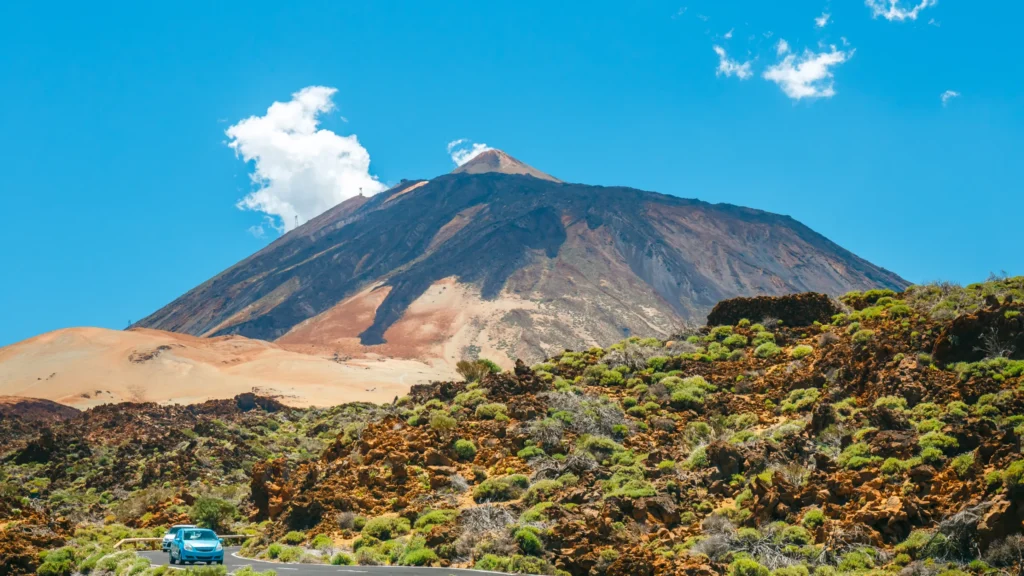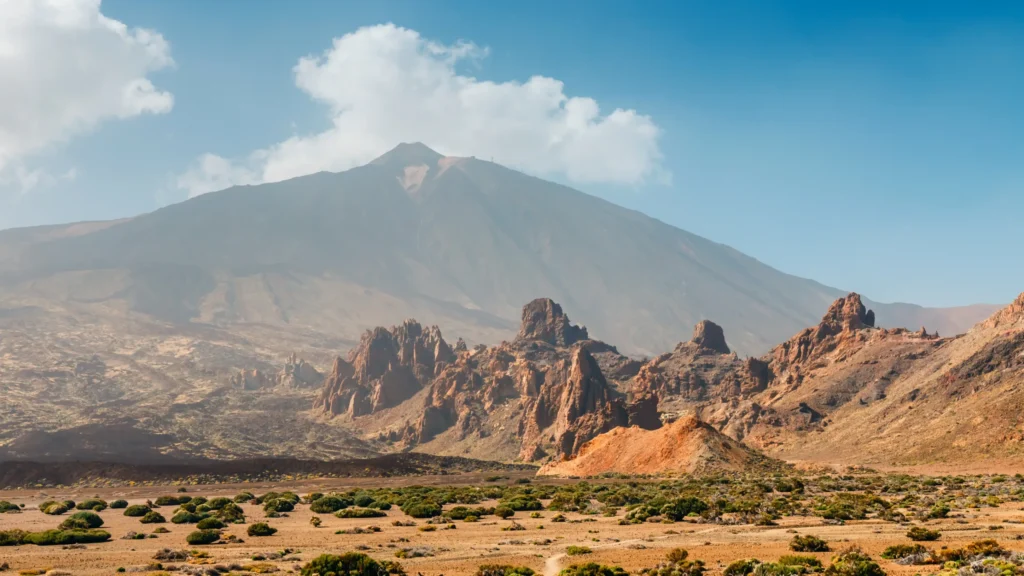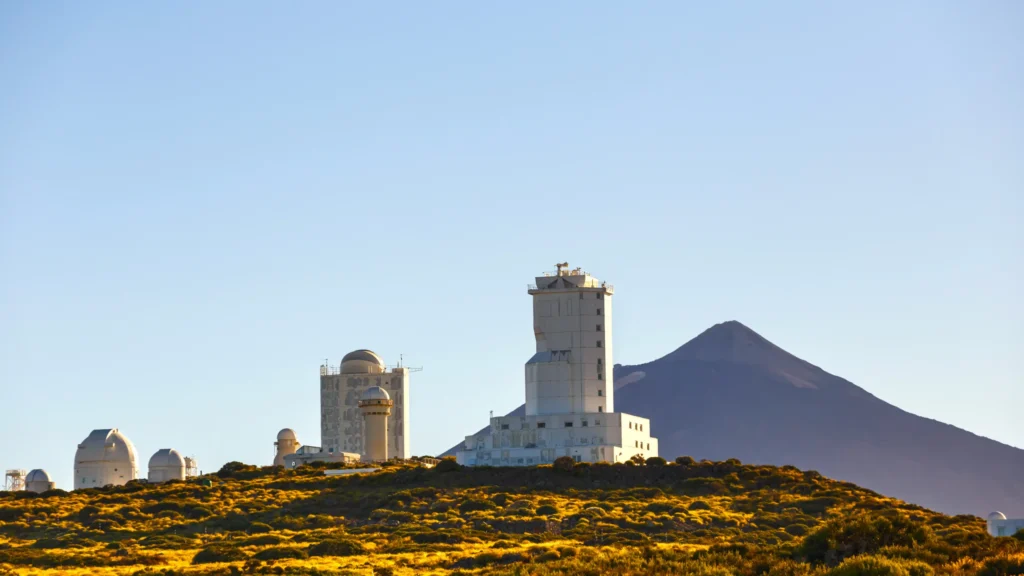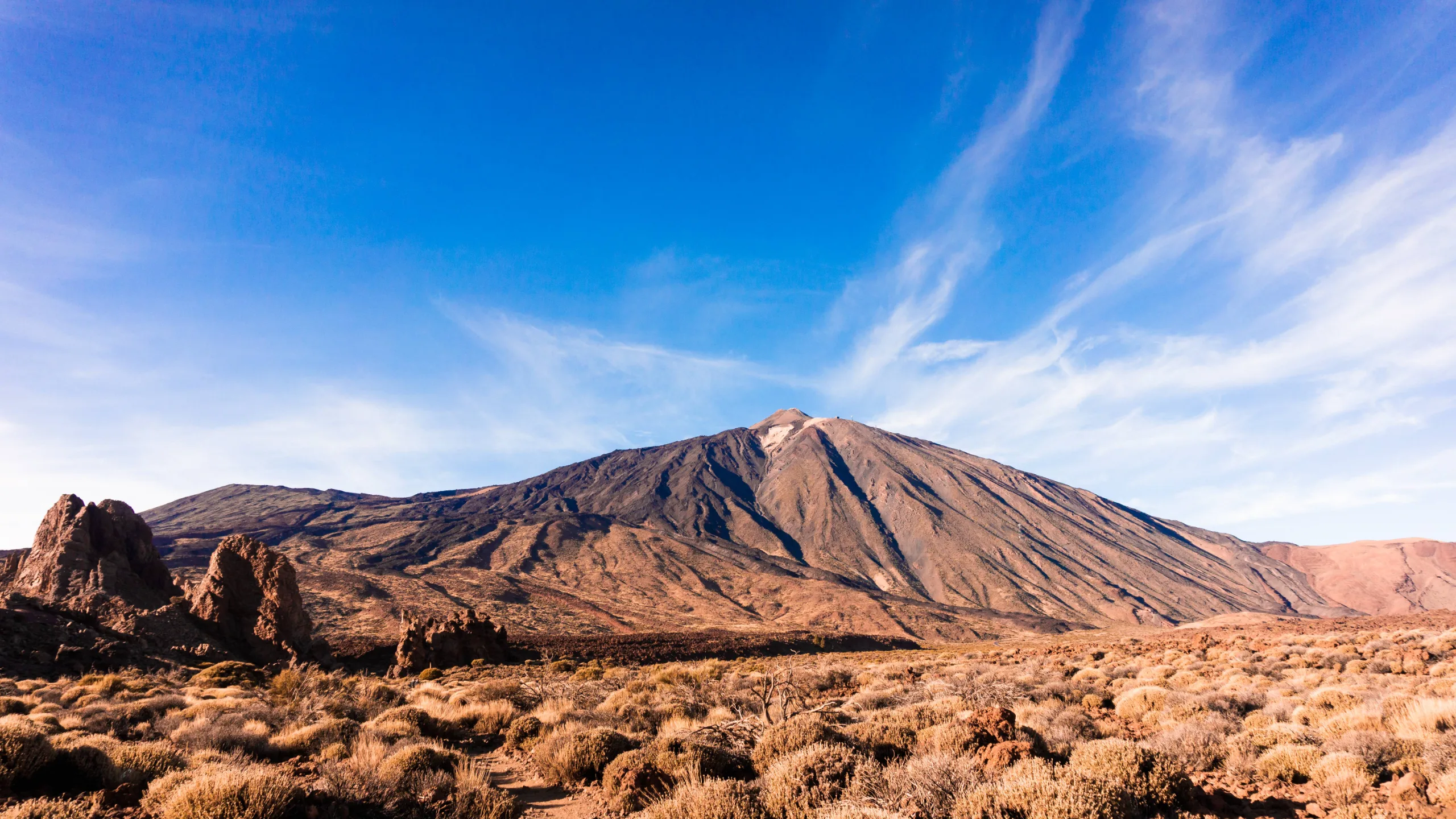
Quick answer: Teide National Park covers about 18,990 hectares in the centre of Tenerife. It was declared in 1954 and has been a UNESCO World Heritage Site since 28 June 2007. Entry is free and you can explore it by car along the TF‑21. Not to miss: the Roques de García, the Llano de Ucanca, the viewpoints, the visitor centres, the cable car and, with a permit, the summit of Mount Teide (3,715 m).
Teide National Park: key facts
- 18,990 hain area, in the centre of Tenerife
- 1954the year it was declared a national park
- 2007UNESCO World Heritage Site, on 28 June
- 3,715 mMount Teide, its highest point (IGN)
- High mountain terrain: almost all of the park is above 2,000 m.
- Free entry: you don’t have to pay or book to get in.
- Management: run by the Cabildo de Tenerife (the island council).
It’s the most visited park in Spain’s National Parks Network.
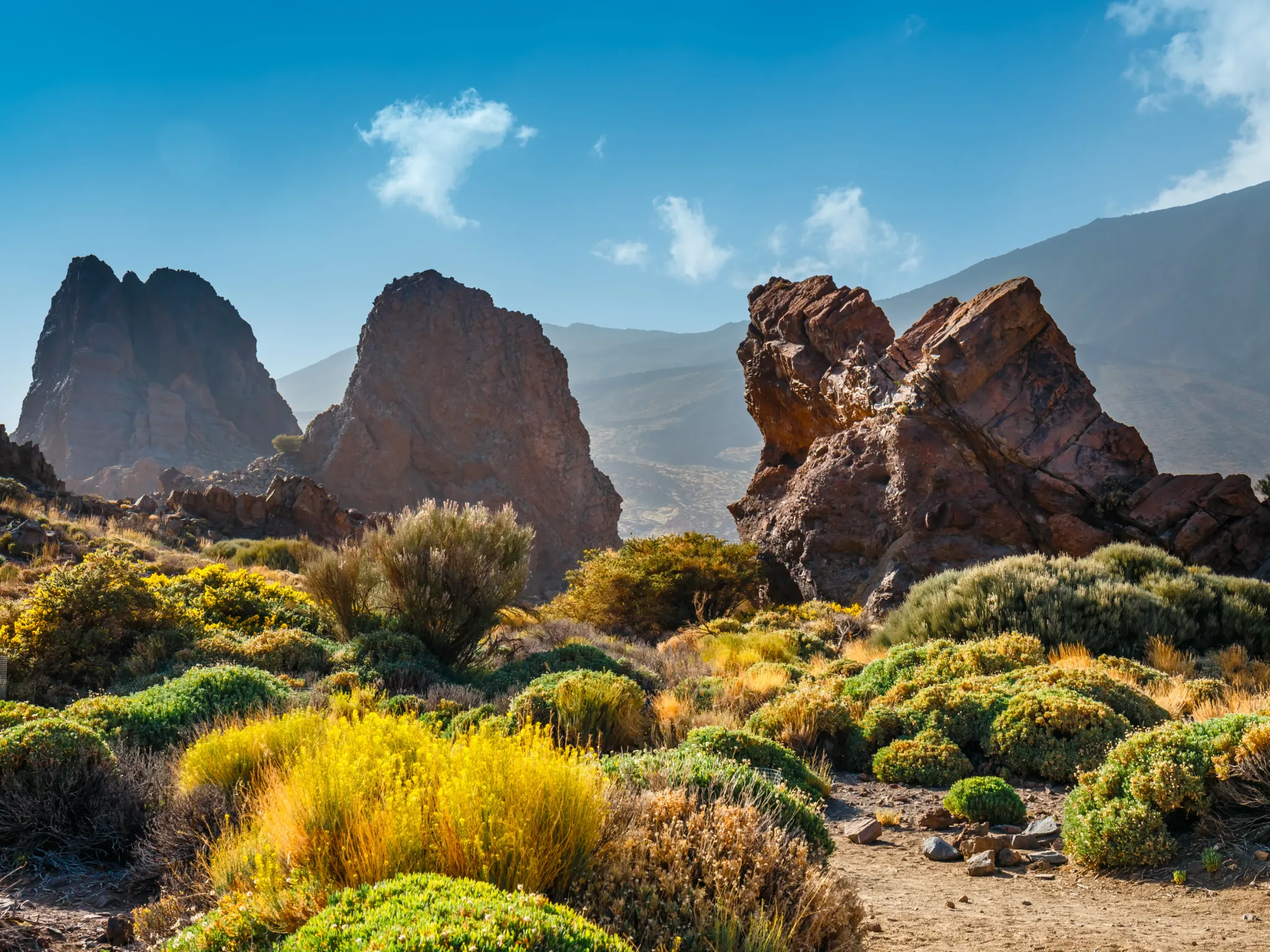
Places not to miss
- Roques de García and Roque Cinchado, with their loop trail that needs no booking.
- Viewpoints such as the Llano de Ucanca, Los Azulejos, Minas de San José or the Narices del Teide.
- The cable car up to La Rambleta, at 3,555 m.
- Teide’s summit, only with a Telesforo Bravo trail permit.
- Pico Viejo and its huge crater.
- The night sky, one of the best in Europe.
What’s free and what needs a booking
Free, no booking
- Entering the park, viewpoints, car parks and visitor centres.
- The Roques de García loop trail (PNT 03) and many other trails.
Ticket or booking needed
- Cable car: ticket on the operator’s website.
- Stratovolcano trails (PNT 07, 09, 10, 23 and 28): booking on Tenerife ON; some carry a fee.
- Bivouac: permit on Tenerife ON.
Trail details are in Teide National Park hikes.
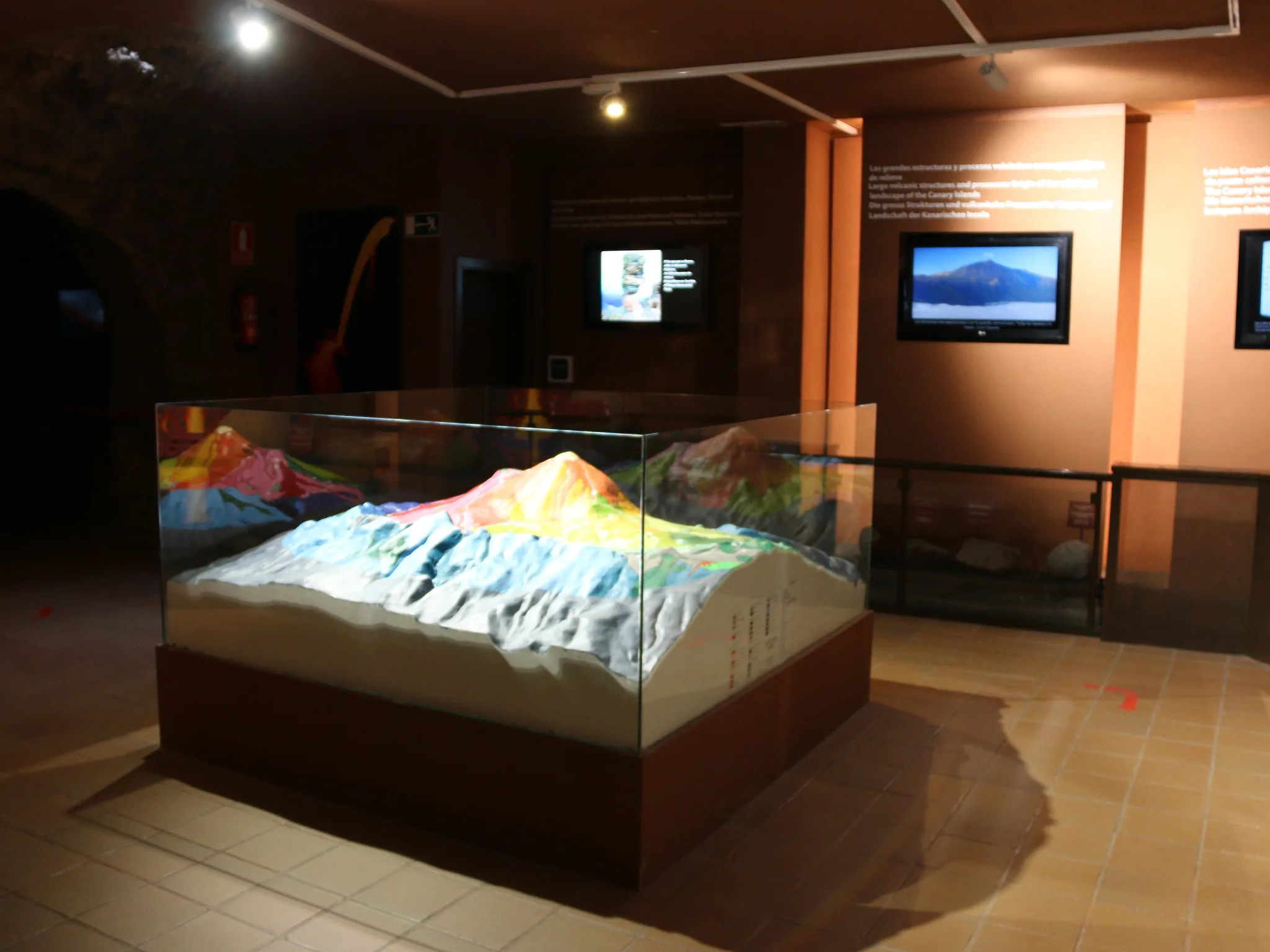
Visitor centres
The park has three visitor centres and a museum:
- El Portillo, at the park’s northern entrance.
- Cañada Blanca, opposite the Roques de García, next to the Parador.
- Telesforo Bravo, in La Orotava, outside the park.
- Juan Évora Ethnographic Museum, next to the Roques.
Opening hours and what to see at each one in Teide visitor centres.
Landscape, plants and wildlife
The heart of the park is the Las Cañadas caldera, with the Teide‑Pico Viejo stratovolcano inside it. Lava flows, cones, pumice and formations such as the Roques de García make up a unique volcanic landscape.
- Teide broom: flowers around May and June.
- Red tajinaste: with flower spikes that can reach several metres.
- Teide violet: a botanical gem that grows above 2,800 metres.
- Wildlife: bats are the park’s only native mammals; lizards and birds such as the chaffinch or the kestrel are also common sights.
National park rules
- Stay on the signposted trails and in designated areas.
- Don’t pick plants or collect rocks or geological items.
- Smoking is banned in the national park, including vapes and e-cigarettes.
- Pets aren’t allowed on the volcano’s regulated trails (except guide dogs).
- Only park in designated areas and don’t leave rubbish.
- Professional photography and filming require a permit from the park.
How to plan your visit
Half a day
Drive through Las Cañadas, stopping at the viewpoints and the Roques de García.
A full day
Add the cable car and, if you have a permit, the summit.
Before you go, read how to get there, what the weather’s like and what to wear.
Frequently asked questions
How much does it cost to enter Teide National Park?
Nothing. Entry is free. You pay for the cable car and some trail permits.
Does the park have opening hours?
The roads are open, except for closures due to snow, ice or fire. The visitor centres and the cable car have their own hours.
How much time do you need?
Half a day for the essentials by car; a full day if you take the cable car or do a trail.
Can I bring my dog?
Pets aren’t allowed on the volcano’s regulated trails, except guide dogs. For the rest of the park, check the current rules on the national park website before you go.
Sources: MITECO (National Parks Network: visitor guide and centres), UNESCO, Instituto Geográfico Nacional, Tenerife ON. Last reviewed: 16 November 2026.