Quick answer: Mount Teide has a high mountain climate. Above 2,000 metres it’s much colder than on the coast, the sun is very strong, the wind can be fierce and in winter it often snows. To find out what the weather is doing today, check AEMET’s mountain bulletin for Teide, the Las Cañadas forecast and the status of the roads, cable car and trails on the day.
What Mount Teide’s climate is like
Almost the whole national park lies above 2,000 metres, which makes it high mountain terrain with extreme conditions. Three things to know:
- Temperature: it drops as you climb. It’s normal to go from T-shirt weather on the coast to needing a fleece in Las Cañadas and a coat at La Rambleta.
- Sun: the air is thinner and drier, so the sun burns much more even when it’s cold.
- Sudden changes: wind, cloud and visibility can change within minutes. That’s why the park requires warm clothing on the volcano’s trails even in summer.
Teide’s climate month by month, with AEMET data
The Izaña station, at 2,369 metres and a few kilometres from Las Cañadas, is the official reference of AEMET (Spain’s state weather agency) for Tenerife’s high mountains. These are its climate normals for 1981‑2010:
- 4.3 °Caverage temperature in January, the coldest month
- 18.5 °Caverage in July, the warmest month
- ≈10 daysof snow a year, almost all from December to March
- 392 mmof rain a year; in June and July, practically none
- Jan2.4
- Feb2.5
- Mar2.1
- Apr0.6
- May0.2
- Jun0
- Jul0
- Aug0
- Sep0
- Oct0.2
- Nov0.6
- Dec1.6
From the month’s average minimum to its average maximum Average days of snow per month
See the data as a table
| Month | Average | Average max | Average min | Rain | Days of snow | Days of frost |
|---|---|---|---|---|---|---|
| January | 4.3 °C | 7.5 °C | 1.1 °C | 47 mm | 2.4 | 12.3 |
| February | 4.7 °C | 8 °C | 1.3 °C | 67 mm | 2.5 | 10.3 |
| March | 6.4 °C | 10.2 °C | 2.7 °C | 58 mm | 2.1 | 9 |
| April | 7.6 °C | 11.8 °C | 3.5 °C | 18 mm | 0.6 | 6.5 |
| May | 10.1 °C | 14.5 °C | 5.8 °C | 7 mm | 0.2 | 2.8 |
| June | 14.4 °C | 18.9 °C | 9.9 °C | 0 mm | 0 | 0 |
| July | 18.5 °C | 23 °C | 14 °C | 0 mm | 0 | 0 |
| August | 18.2 °C | 22.6 °C | 13.8 °C | 5 mm | 0 | 0 |
| September | 14.5 °C | 18.6 °C | 10.4 °C | 13 mm | 0 | 0 |
| October | 10.6 °C | 14.3 °C | 6.9 °C | 37 mm | 0.2 | 0.6 |
| November | 7.8 °C | 11.1 °C | 4.5 °C | 54 mm | 0.6 | 3.8 |
| December | 5.6 °C | 8.8 °C | 2.4 °C | 60 mm | 1.6 | 8.3 |
At La Rambleta and on the summit, more than 1,000 metres higher, it’s considerably colder and the wind is stronger. Treat these figures as the minimum level of warmth you’ll need.
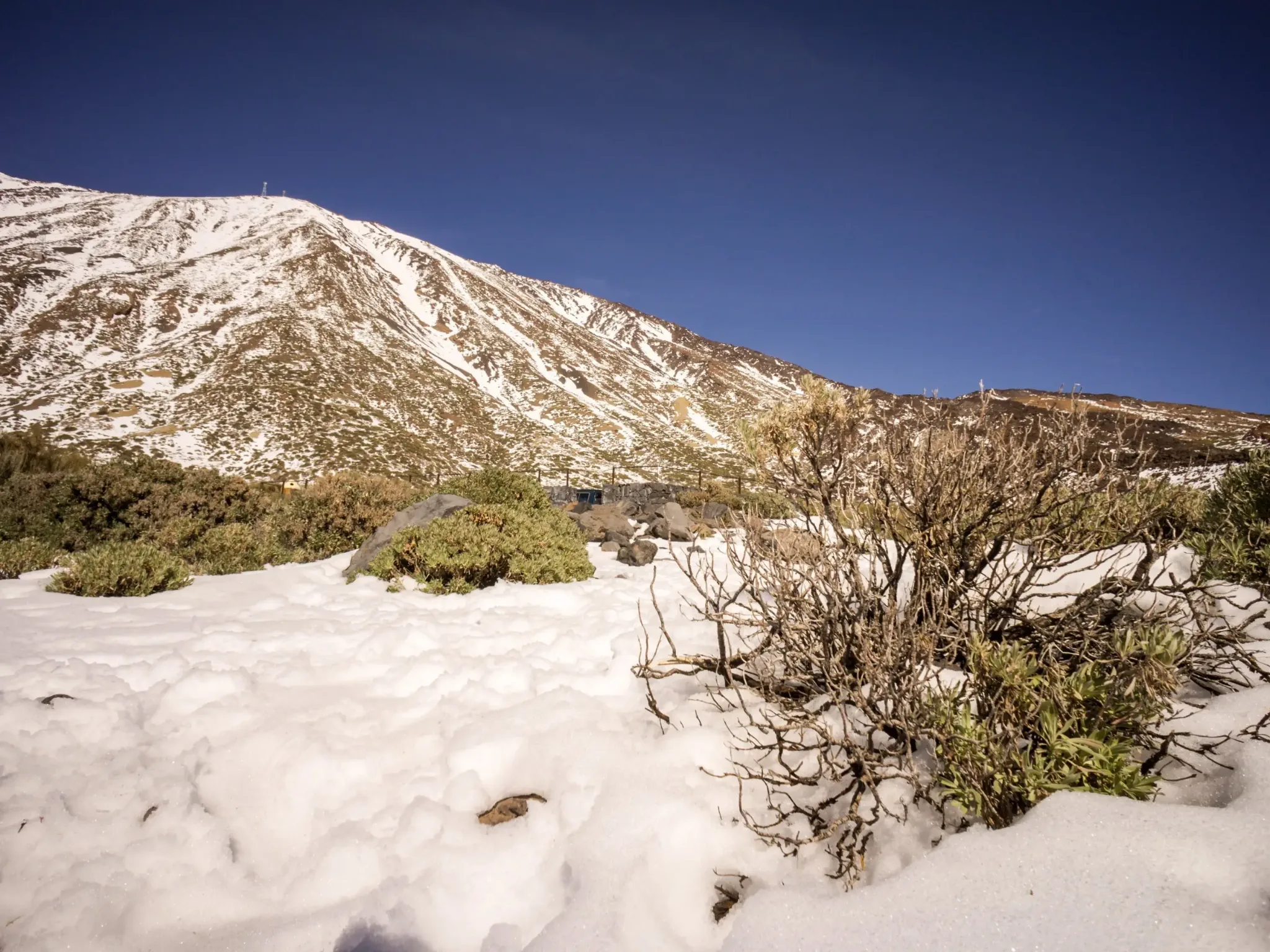
Mount Teide through the seasons
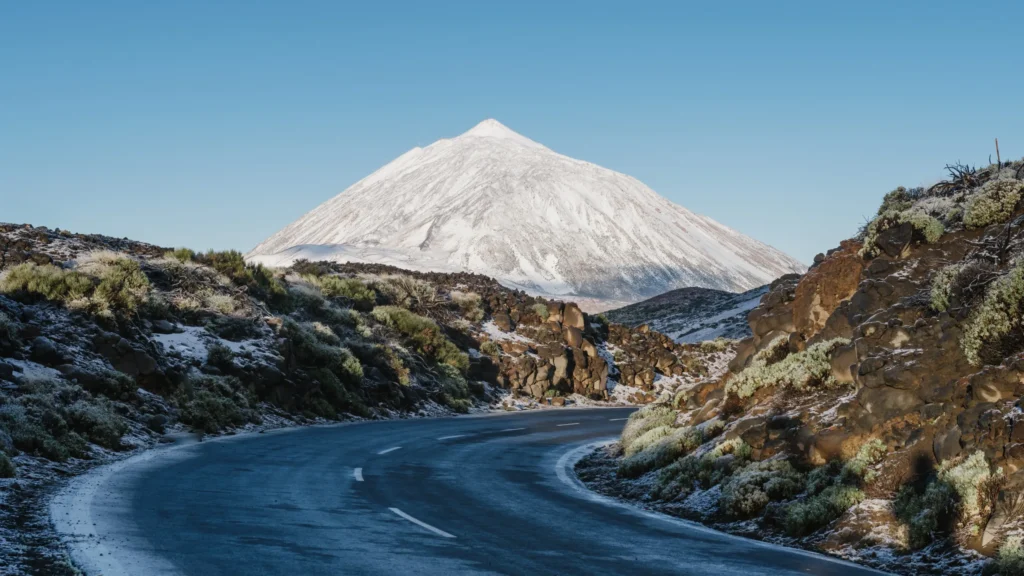
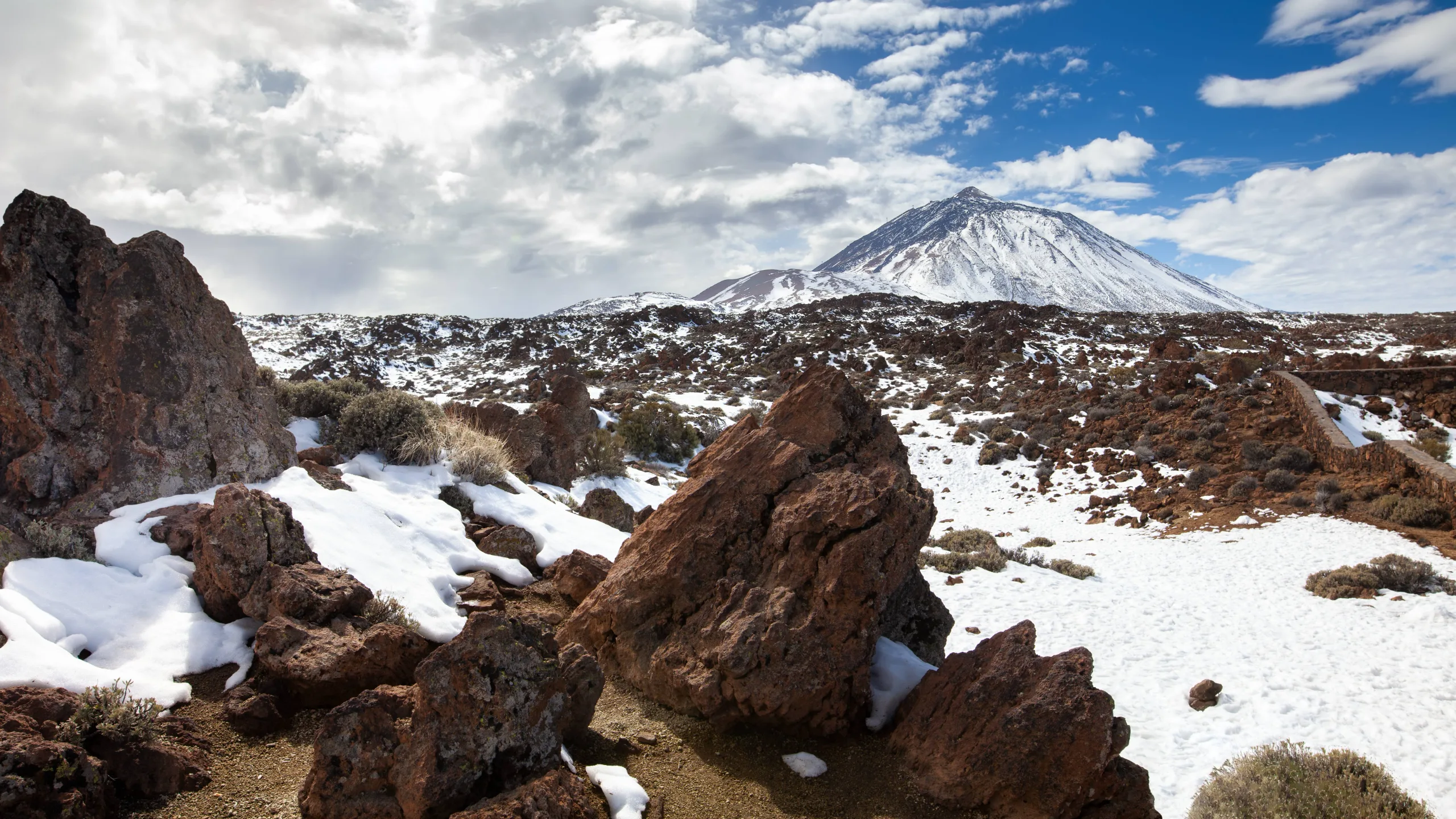
- Winter (Dec–Mar): Bitter cold, frost and possible snowfall. Occasional closures of roads, the cable car and trails. Spectacular snowy landscapes.
- Spring (Apr–Jun): Milder temperatures, with Teide broom and red tajinaste in flower around May and June. A good time for walking.
- Summer (Jul–Sep): Clear, hot days in Las Cañadas, but cool nights and cold on the summit. More people and fire risk.
- Autumn (Oct–Nov): Changeable weather, with the first snow possible late in the season. Fewer visitors.
If you’re choosing a date, also see the best time of day and year to go up.
Snow on Mount Teide
- 2.5 daysof snow in February, the snowiest month (Izaña)
- ≈54 daysof frost a year, from October to May
Snow is most common between December and March. When it snows, the roads may close or open with restrictions, the cable car may stop because of ice, and the volcano’s trails require crampons, an ice axe and a signed self-declaration of experience. Don’t go up to see the snow without first checking the roads in Mount Teide today, and only park in designated areas.
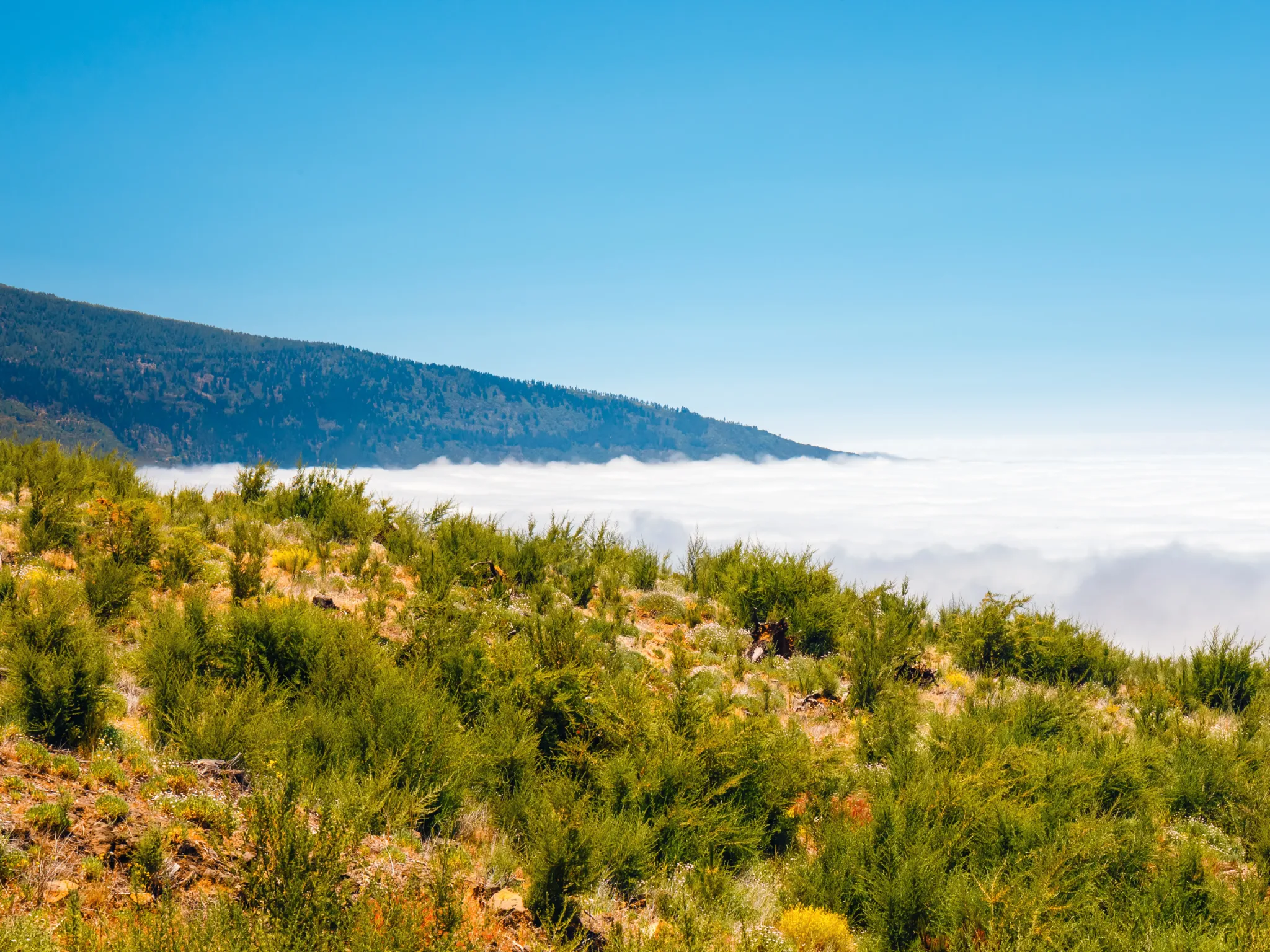
The sea of clouds
On many days Mount Teide seems to float above a white blanket. Here’s how it works:
- The trade winds create it: the moist north-easterly wind leaves the clouds below Las Cañadas, on the mid-slopes of the north.
- Cloudy below, sunny above: grey skies in Puerto de la Cruz don’t mean grey skies on Teide; often it’s the other way round.
- Very clear skies: Izaña averages 382 hours of sunshine in June and about the same in July.
Where to check the Mount Teide forecast
- AEMET – Teide mountain bulletin: the reference for hiking and high mountain conditions.
- AEMET – Forecast by municipality: La Orotava and the other municipalities that include part of the park.
- Cabildo Road Information Centre: cic.tenerife.es for closures due to snow or ice.
- Tenerife ON: each trail’s page warns of ice or snow.
- Cable car website: service status.
Frequently asked questions
Is it cold on Mount Teide in summer?
Summer days in Las Cañadas can be hot, but on the summit and early or late in the day it’s cold. Always bring a warm layer.
When does it snow on Mount Teide?
Mainly between December and March, although it can snow in late autumn or in spring.
What’s the temperature at the top of Mount Teide?
It varies a lot with the season, the wind and the time of day. Check AEMET’s mountain bulletin for the day of your visit.
Why is it cloudy below and clear above?
Because of the sea of clouds that the trade winds form on the mid-slopes. Teide usually stays above it.
Sources: MITECO (national park visitor guide), Tenerife ON (compulsory gear), AEMET; AEMET climate normals for Izaña (C430E), 1981‑2010. Last reviewed: 16 November 2026.