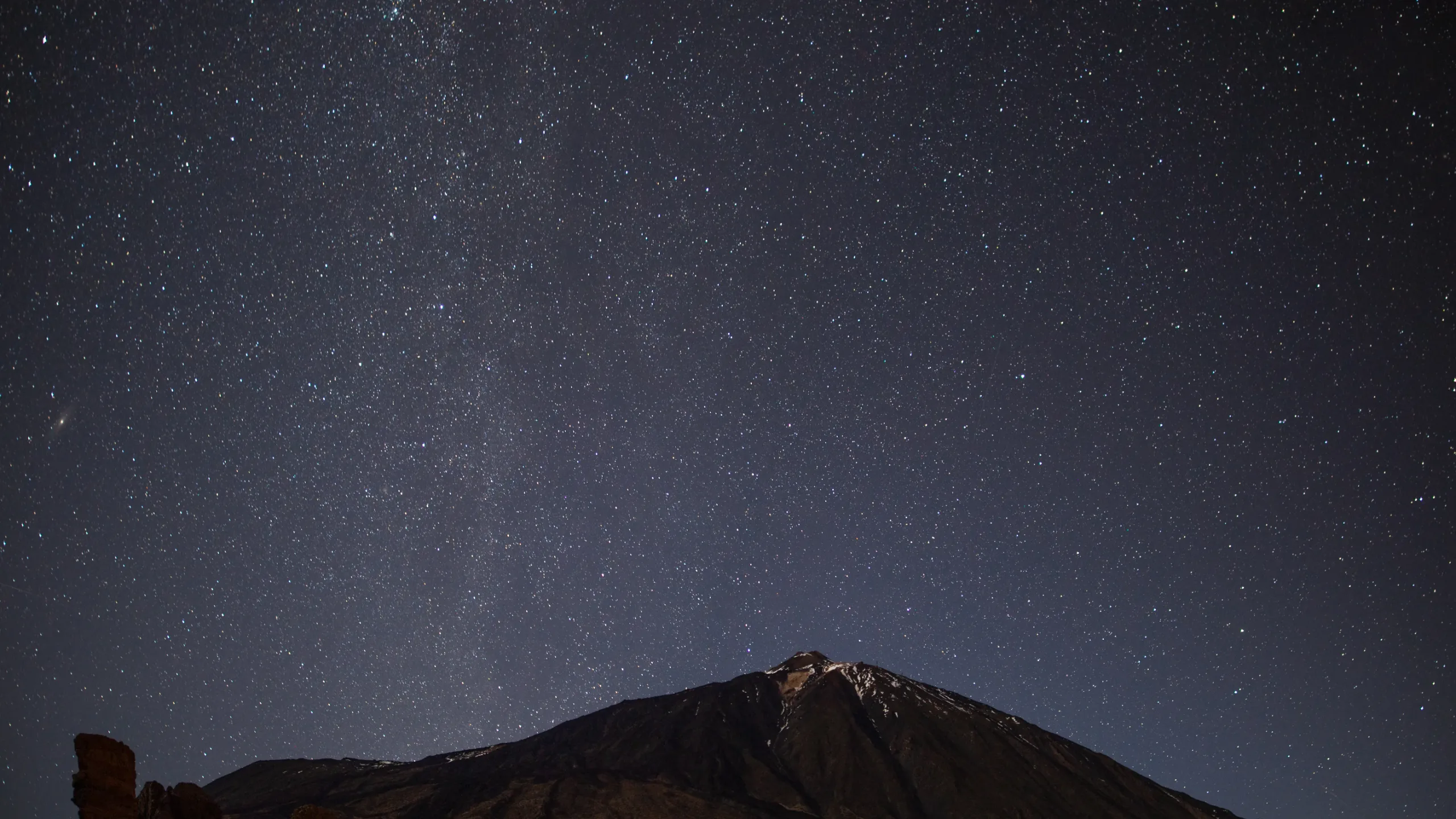
Quick answer: Mount Teide is one of the best places in Europe for stargazing, thanks to its altitude, its dry air and the legal protection of the Canary Islands’ skies from light pollution. You can drive up on your own to the Las Cañadas viewpoints, ideally on clear, moonless nights, with plenty of warm clothing. There are also guided activities and visits to the Teide Observatory if you book ahead.
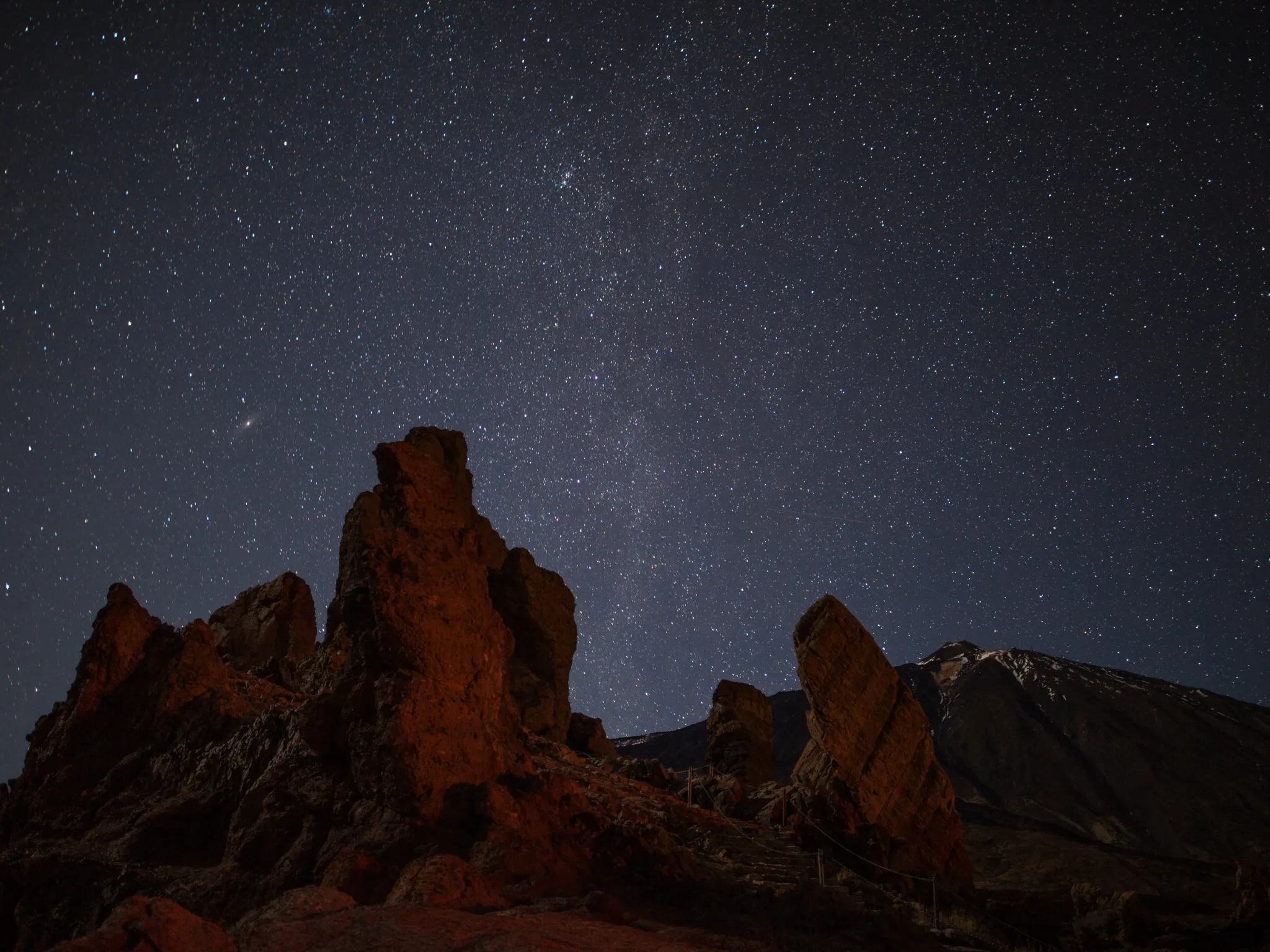
Why Mount Teide’s sky is so good
Three reasons explain why Teide’s sky is among the best in Europe:
- Altitude: above 2,000 metres you’re above much of the humidity and often above the sea of clouds, which acts as a screen against the lights on the coast.
- Dry, stable air: the air up top is dry and stable, with less turbulence to make the stars twinkle.
- A sky protected by law: the Canary Islands have legal protection of the sky for astronomical observation. That’s why one of the Instituto de Astrofísica de Canarias observatories is on Teide.
Stargazing calendar for Mount Teide in 2027
The best nights are around the new moon. Here are the 2027 new moons according to Spain’s Instituto Geográfico Nacional, along with each month’s average minimum temperature at Izaña, the AEMET weather station closest to Las Cañadas:
- January71.1 °C
- February61.3 °C
- March82.7 °C
- April73.5 °C
- May65.8 °C
- June49.9 °C
- July414.0 °C
- August2 and 3113.8 °C
- September3010.4 °C
- October296.9 °C
- November284.5 °C
- December272.4 °C
New moon date in 2027 · °C average minimum temperature for the month at Izaña (2,369 m)
In summer the minimum is around 10–14 °C and in winter it drops to 1–2 °C. At La Rambleta and the higher viewpoints it’s colder still, and with wind it feels much worse.
When to go stargazing
- Moonless or new moon nights: a full moon drowns out many stars.
- Clear skies up top: check AEMET’s mountain bulletin. A sea of clouds below is an advantage.
- Summer: the core of the Milky Way is easier to see and the nights are less cold, though still chilly.
- Winter: very clear skies, but bitter cold and possible closures due to snow. Check the state of the roads.
Where to stop the car
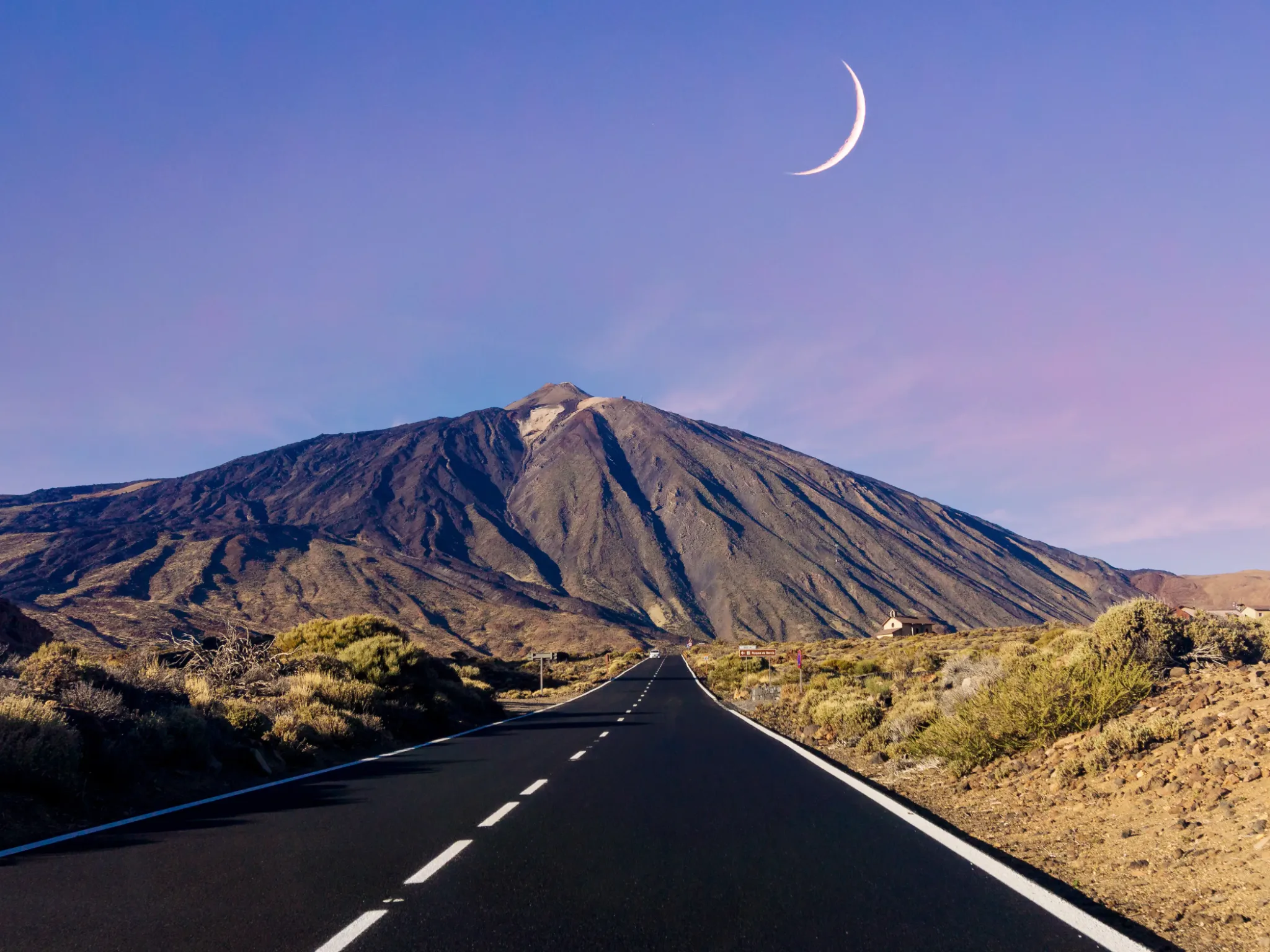
Look for viewpoints and designated parking areas away from lights, such as the parts of Las Cañadas around the Llano de Ucanca or the TF‑38. Don’t stop on verges or bends: at night visibility on the road is poor. You’ll find ideas in Teide viewpoints.
At sunset, Teide’s shadow is cast eastwards over the sea of clouds: it’s worth arriving before the sun goes down.
What to bring
- Winter clothes: coat, hat, gloves and something to sit on. At night the temperature drops a lot, even in summer.
- A torch with a red light, so your eyes stay adjusted to the dark.
- A star chart or app to identify constellations.
- Binoculars: even a basic pair will show you star clusters and the Moon in detail.
- A hot drink and something to eat.
Rules and safety at night
- Stay in designated areas and don’t walk off the trails.
- The volcano’s trails (PNT 07, 09, 10, 23 and 28) can only be walked with a permit and within the booked time slot, at night too.
- Overnight stays are only allowed in bivouac areas with a Tenerife ON permit or in accommodation.
- Don’t use powerful lights or leave rubbish. Drive slowly on the way back.
Guided activities and the Teide Observatory
- Companies with telescopes: several run stargazing sessions guided by astronomers.
- Sunset cable car: sunset rides are offered on some dates.
- Teide Observatory: at Izaña, it offers guided visits if you book ahead.
We explain it in how to visit the Teide Observatory.
Frequently asked questions
Can you go stargazing on Teide for free?
Yes. You can drive up on your own to the Las Cañadas viewpoints without paying anything.
Do you need a permit to visit Teide at night?
Not to drive on the roads and stop in designated areas. You do to walk the volcano’s regulated trails or to stay overnight in bivouac areas.
Which night is best?
A night that’s clear up top and moonless, or with a new moon.
Is it very cold?
Yes. At night the temperature in Las Cañadas drops a lot at any time of year. Dress as you would for winter.
Sources: Tenerife ON (permits and bivouac), Instituto de Astrofísica de Canarias (Teide Observatory visits); Instituto Geográfico Nacional, 2027 astronomical calendar (moon phases); AEMET climate normals for Izaña, 1981‑2010. Last reviewed: 16 November 2026.